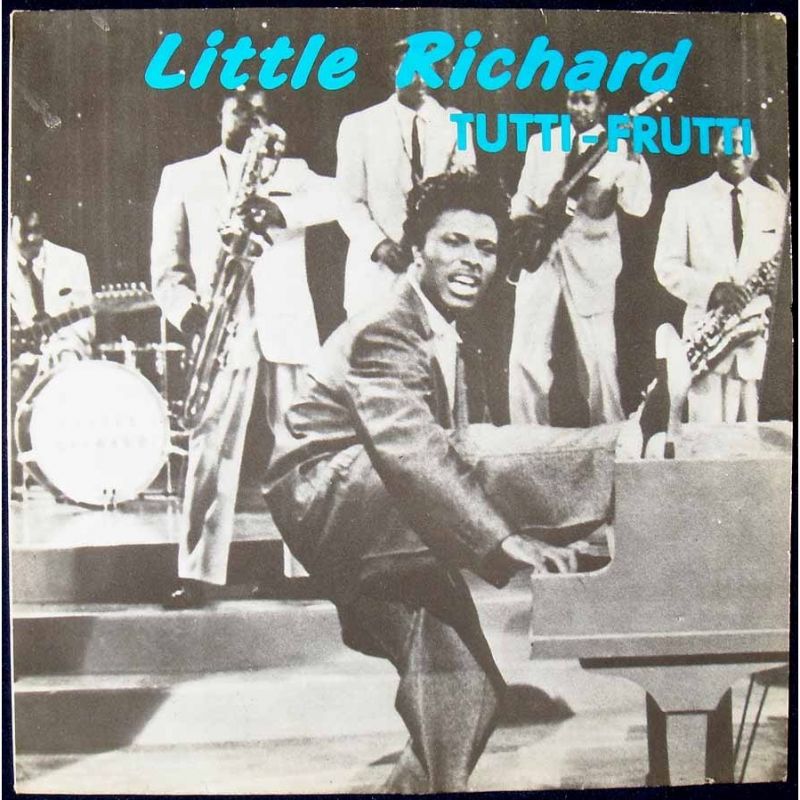
September 14: Little Richard recorded Tutti Frutti in 1955

little-richard

The phrase next to Robert Zimmerman’s picture in the 1959 Hibbing High School Yearbook was “To join Little Richard.”

“Bob Dylan is my brother. I love him same as Bobby Darin is my baby. I feel Bob Dylan is my blood brother. I believe if I didn’t have a place to stay, Bob Dylan would buy me a house. He sat by my bed; he didn’t move for hours. I was in pain that medicine couldn’t stop. My tongue was cut out, leg all tore up, bladder punctured. I was supposed to be dead. Six feet under. God resurrected me; that’s the reason I have to tell the world about it.”
– Little Richard (to John Waters, 1987)

Tutti Frutti (meaning “all fruits” in Italian) is a song written by Little Richard (Richard Wayne Penniman) along with Dorothy LaBostrie that was recorded in 1955 and became his first major hit record. With its opening cry of “A-wop-bom-a-loo-mop-a-lomp-bom-bom!” (a verbal rendition of a drum pattern that Little Richard had imagined) and its hard-driving sound and wild lyrics, it became not only a model for many future Little Richard songs, but also a model for rock and roll itself. The song introduced several of rock music’s most characteristic musical features, including its loud volume and vocal style emphasizing power, and its distinctive beat and rhythm.

It was recorded in September 1955 and released in November the same year.

Continue reading “September 14: Little Richard recorded Tutti Frutti in 1955”
August 17: The Band released Stage Fright in 1970

the band stage fright

See the man with the stage fright
Just standin’ up there to give it all his might.
And he got caught in the spotlight,
But when we get to the end
He wants to start all over again.

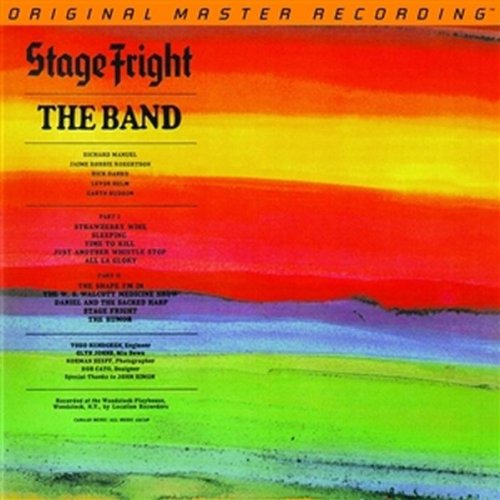
August 17: The Band released Stage Fright in 1970

Stage Fright is the third studio album by The Band. Much more of a rock album than its predecessors, it was a departure from their previous two efforts in that its tone was darker and featured less of the harmony vocal blend that had been a centerpiece of those two albums. It also included the last two recordings by The Band of new songs credited to pianist Richard Manuel; both were co-written with guitarist Robbie Robertson, who would continue to be the group’s dominant lyricist until the group disbanded in 1976. Nonetheless, the tradition of switching instruments that had begun on the previous album continued here, with each musician contributing instrumental parts on at least two different instruments.

Engineered by an up-and-coming Todd Rundgren, and produced by the group themselves for the first time, the album was recorded at the Woodstock Playhouse in their homebase of Woodstock, New York.

Stage Fright (from The Last Waltz):

Continue reading “August 17: The Band released Stage Fright in 1970”

August 15: The Beatles played at Shea Stadium in 1965

Screen Shot 2016-08-15 at 15.35.40

August 15: The Beatles played at Shea Stadium in 1965

“Now, ladies and gentlemen, honoured by their country, decorated by their Queen, loved here in America, here are The Beatles!”
– Ed Sullivan

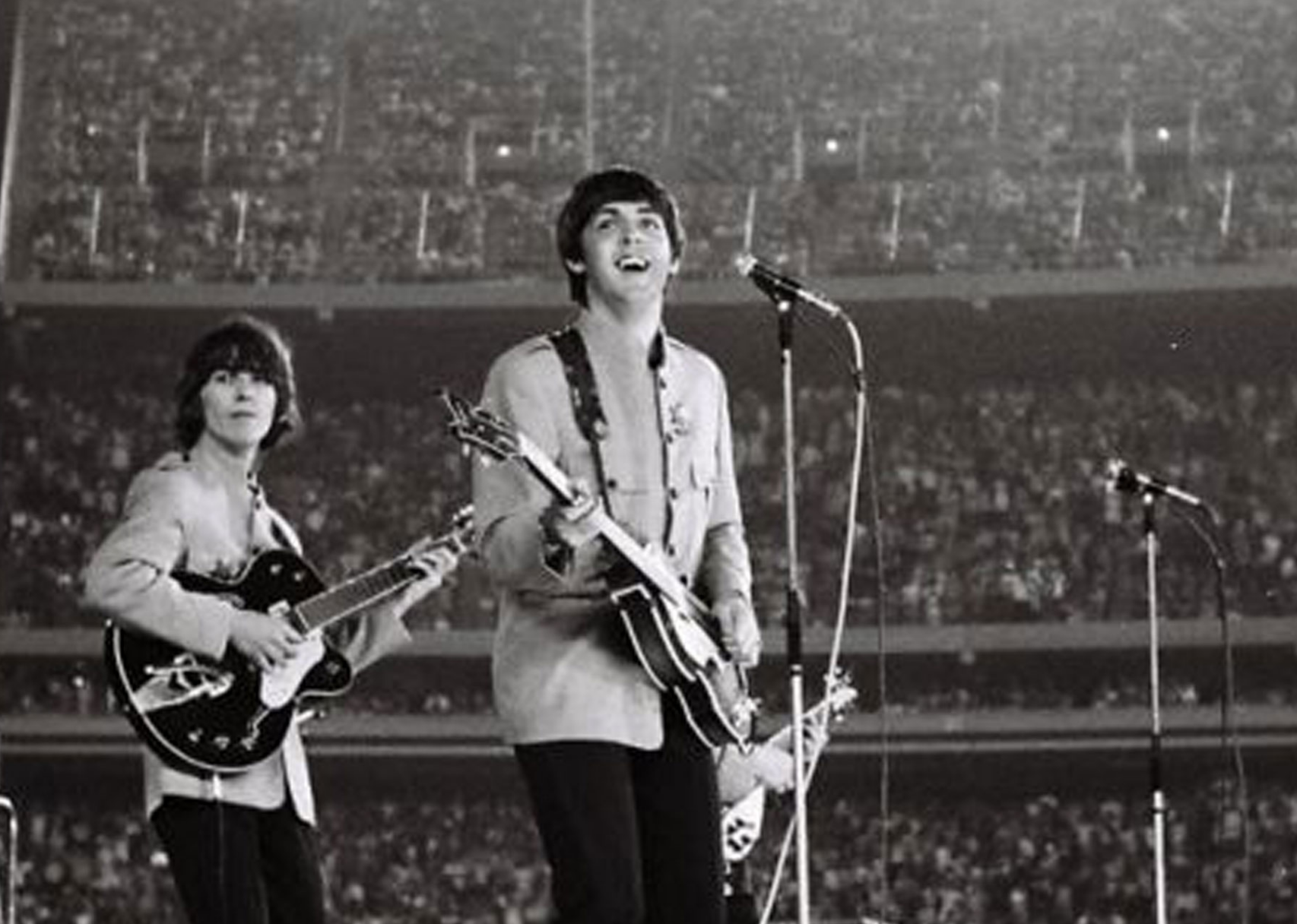
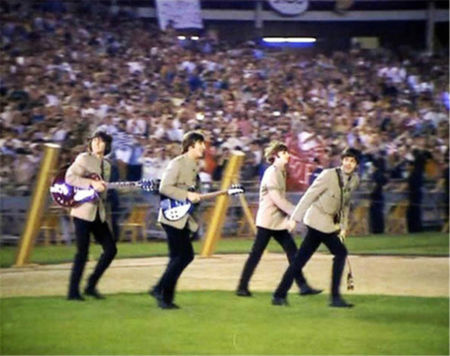
The Shea Stadium concert on 15 August was record-breaking and one of the most famous concert events of its era.  Over 55,000 people saw the concert.  “Beatlemania” was at one of its highest marks at the Shea show. Film footage taken at the concert shows many teenagers and women crying, screaming, and even fainting. The crowd noise was such that security guards can be seen covering their ears as The Beatles enter the field.

Shea2


The Beatles interview before Shea Stadium:

Continue reading “August 15: The Beatles played at Shea Stadium in 1965”

August 13: Lynyrd Skynyrd released Pronounced ‘Lĕh-‘nérd ‘Skin-‘nérd in 1973

lynyrd-skynyrd-pronounced-leh-nerd-skin-nerd

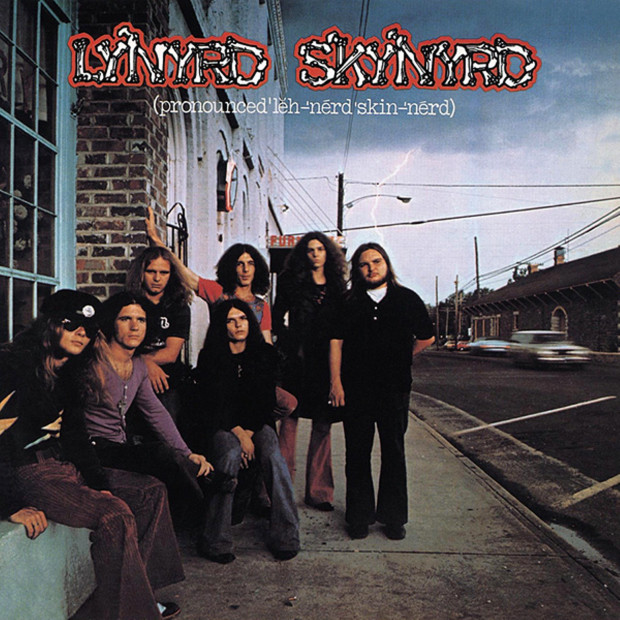
(Pronounced ‘lĕh-‘nérd ‘skin-‘nérd) is the debut album from Lynyrd Skynyrd, released in 1973. The album features several of the band’s most well-known songs, including “Gimme Three Steps”, “Simple Man”, “Tuesday’s Gone” and “Free Bird”, the latter of which launched the band to national stardom.

Bassist Leon Wilkeson left the band during the album’s early recording sessions only playing on two tracks. Strawberry Alarm Clock guitarist Ed King was asked to fill in for Wilkeson on bass during the remaining sessions, as Wilkeson already wrote many of the bass parts. This left Skynyrd with only six official members at the time of the album’s release. Not long after, King remained with the band, and was made a member, so that they could replicate the triple-guitar lead during live performances. Wilkeson returned to the band when it was time to take the photo for the album cover and embark on the tour for the album. It was certified gold on December 18, 1974, platinum and 2x platinum on July 21 1987 by the RIAA.

Rolling Stone Magazine named it the 39 best debut album of all time:

From the git-go, these shaggy folks from deepest Jacksonville, Florida played hard, lived harder and shot from the hip, all three guitars blazing in music that blew past the Mason-Dixon line to become America’s next top boogie-rock. Discovered and produced by from essential mid-Sixties Dylan sideman Al Kooper, Skynyrd offered taut rockers including “Poison Whiskey” and the perpetual lighter (well, now iPhone) waving anthem “Freebird.” Perhaps the ultimate Southern rock band and this record aged shockingly well; just ask the Drive-By Truckers.

Here’s Lynyrd Skynyrd in their prime, a full set from BBC’s Old Grey Whistle Test (youtube playlist):

Continue reading “August 13: Lynyrd Skynyrd released Pronounced ‘Lĕh-‘nérd ‘Skin-‘nérd in 1973”

August 6: The Beatles released “Help!” in 1965

The_Beatles-Help_-Frontal

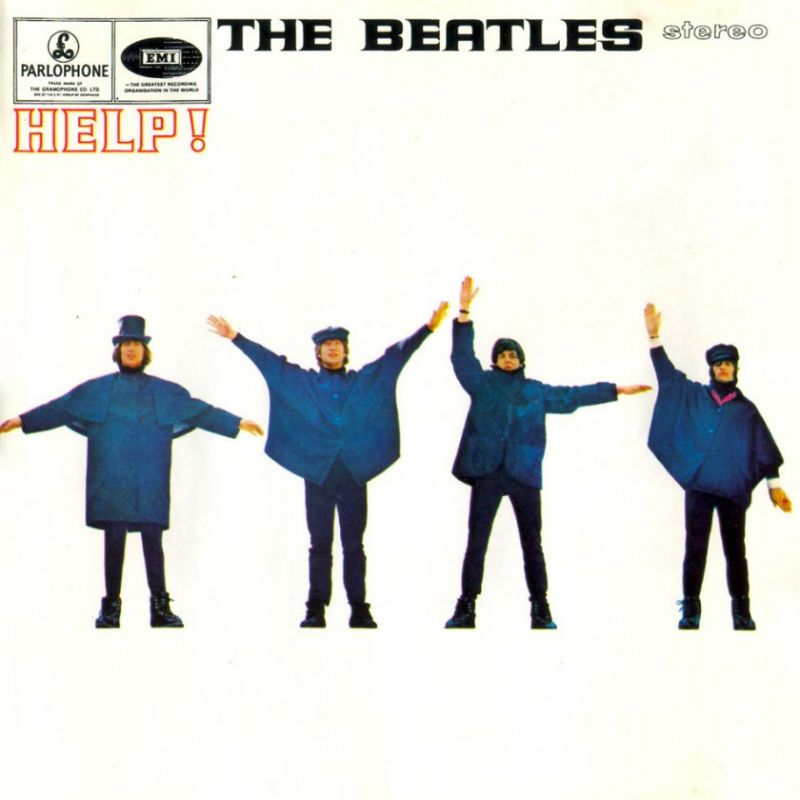
.. a big step forward, exploring doubt, loneliness, alienation, adult sexual longing, acoustic guitars, electric piano, bongos, castanets, and the finest George songs known to man. … Help! was utterly ruined in its U.S. version, which cut half the songs and added worthless orchestral soundtrack filler, so it’s always been underrated. But Help! is the first chapter in the astounding creative takeoff the Beatles were just beginning: the soulful bereavement of “Ticket to Ride,” the impossibly erotic gentleness of “Tell Me What You See,” the desperate falsetto and electric punch of “You’re Going to Lose That Girl.”
~rollingstone.com

…. the album’s masterpiece is McCartney’s brooding, deceptively simple chamber-pop ballad “Yesterday.” …  it’s compositionally complex, one of the first major pop songs to draw directly from classical music, juxtaposing acoustic guitar with a string quartet, shifting from minor to major chords. It set the stage for one of the most groundbreaking and innovative periods in The Beatles’ career, not to mention pop music in general.
~Mark Kemp (pastemagazine.com)

Help! – from a 6-song set filmed for British television in August of 1965:

From Wikipedia:

Released 6 August 1965
Recorded 15–19 February, 13 April, 10 May& 14–17 June 1965,
EMI Studios, London
Genre Rock
Length 34:20
Label Parlophone
Producer George Martin

Continue reading “August 6: The Beatles released “Help!” in 1965″

August 1: The late Jerry Garcia was born in 1942

jerry garcia 3

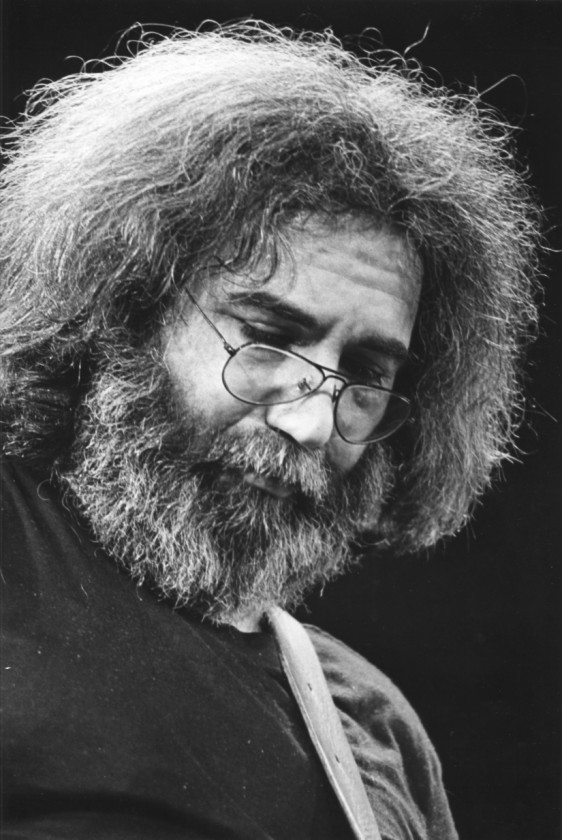
There’s no way to measure his greatness or magnitude as a person or as a player. I don’t think eulogizing will do him justice. He was that great – much more than a superb musician with an uncanny ear and dexterity. He is the very spirit personified of whatever is Muddy River Country at its core and screams up into the spheres. He really had no equal. To me he wasn’t only a musician and friend, he was more like a big brother who taught and showed me more than he’ll ever know. There are a lot of spaces and advances between the Carter Family, Buddy Holly and, say, Ornette Coleman, a lot of universes, but he filled them all without being a member of any school. His playing was moody, awesome, sophisticated, hypnotic and subtle. There’s no way to convey the loss. It just digs down really deep.
~Bob Dylan (Jerry Garcia’s Obituary – 10 August 1995)

Bruce Hornsby inducts the Grateful Dead at the 1994 Hall of Fame Induction Ceremony:

Continue reading “August 1: The late Jerry Garcia was born in 1942”